Ingredients
Method
Preparation Steps
- Prepare the fruit by washing it and removing any large seeds or pits. Remove seeds from pears and apples, and pits from plums, peaches, and apricots. Small seeds in berries can be left in. Skins do not need to be removed.
- Cut any larger fruit into halves or quarters to help the blender process them.
- Place the fruit and lemon juice in the jar of your blender. Blend until very smooth. If the fruit is too thick to blend, add water or fruit juice, 1 tablespoon at a time, until it processes smoothly. The less liquid added, the shorter the drying time.
- Taste the fruit puree and add sugar if desired. Blend in the sugar until fully incorporated.
- Line the bottom of the baking sheets with baking mats or parchment paper.
- Divide the fruit mixture evenly between the two baking sheets, pouring it into the center.
- Use a spatula to evenly spread the fruit mixture over the baking mats or parchment paper, ensuring an even layer and avoiding the edges.
- Adjust oven racks to the upper middle and lower middle positions.
- Place the baking sheets into the oven and preheat to the lowest possible temperature (around 170°F or 75°C).
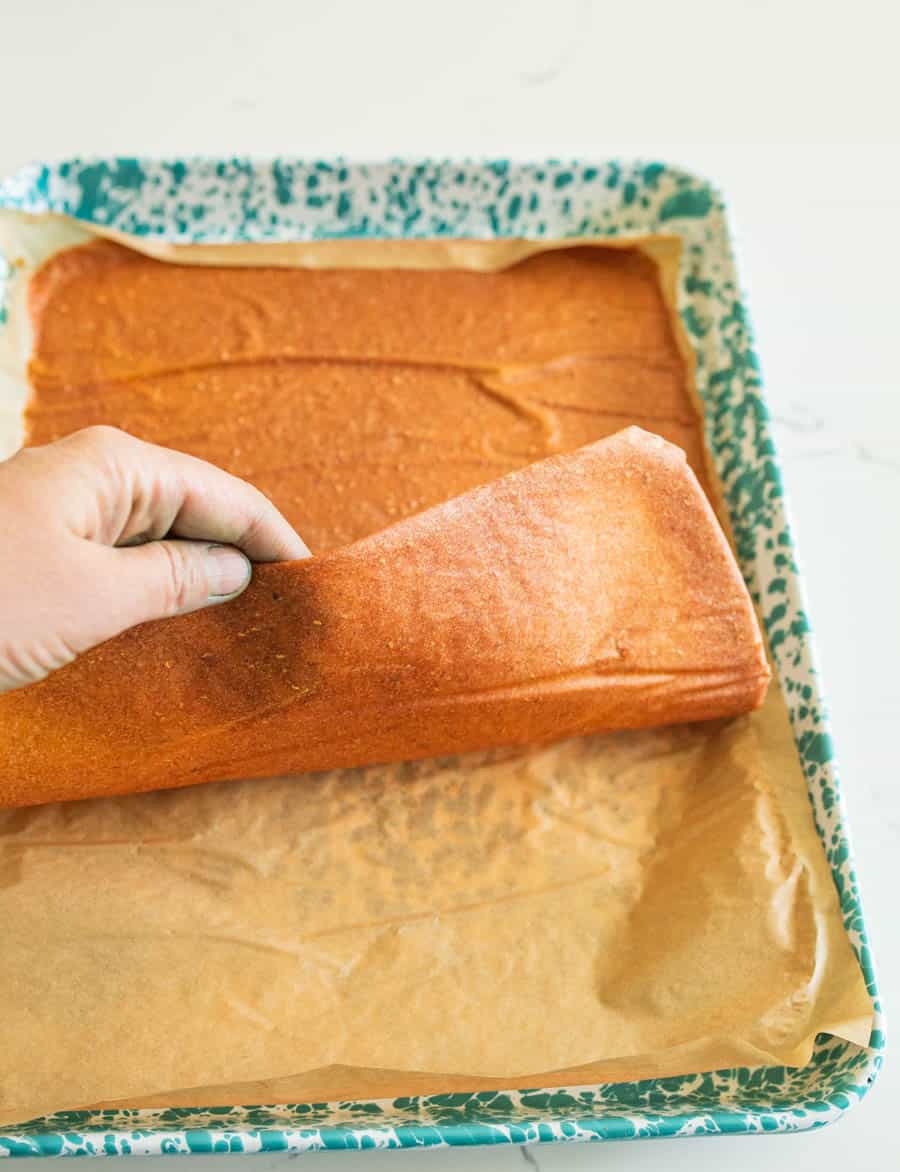
- Bake for 3-6 hours, or until the fruit leather is no longer tacky to the touch. You can open the oven door briefly to allow steam to escape and rotate the pans occasionally for even cooking.
- Allow the pans to cool completely before removing the fruit leather.
- If using parchment paper, cut the parchment and fruit leather together into strips. If using baking mats, peel the fruit leather off the mat and cut into strips. Roll the strips for storage.
Notes
Store rolled fruit leather in an airtight container. It can be kept at room temperature for about 2 weeks, or refrigerated for longer storage, especially in humid climates.